Khwaja Abdul Hamied · founded 1935 · Mumbai, India
Cipla
A 1935 Bombay founding by Dr. Khwaja Abdul Hamied that built India's pharmaceutical self-reliance from before Independence, became the global access-to-medicine story under Dr. Yusuf K. Hamied in 2001, and today is a roughly ₹27,500 crore listed pharma anchored by respiratory and chronic-care depth.
After FY2025 revenue of about ₹27,548 crore and a US business at an all-time high of about $934 million, the question is whether the same operational conviction that produced 1939 wartime supply and 2001 AIDS-drug access scales into the daily call-by-call execution that decides a pharma quarter today.
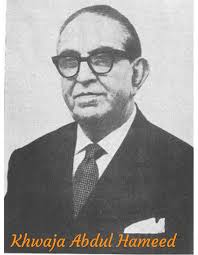
Who founded Cipla and when?
Dr. Khwaja Abdul Hamied (1898 to 1972), a Berlin-PhD chemist and Indian nationalist, founded Cipla in 1935 in Bombay. He gave the company all his patents and proprietary formulae without charging any royalty.
What is Cipla's commercial signature?
Respiratory and chronic-care depth in India, plus a long-standing global access-to-medicine identity built on Dr. Yusuf K. Hamied's February 2001 offer of HIV/AIDS drugs at about $350 per patient per year, roughly one thirtieth of the then global standard price.
How big is Cipla today?
Per FY2025 audited results, total income from operations was about ₹27,548 crore, EBITDA about ₹7,128 crore and net profit about ₹5,273 crore, up about 28.4 percent year on year. The US business reached an all-time high of about US$934 million.
Who runs Cipla today?
Umang Vohra serves as Managing Director and Global Chief Executive Officer. Dr. Yusuf K. Hamied is the longtime chairman and architect of the 2001 access-to-medicines moment. The Hamied family remains the anchor of the company.
Key takeaways
Origin
In 1924, a young chemistry graduate from Aligarh applied for a passport to study in Germany. The British District Magistrate refused him, citing his political activities. He pushed back, got the passport, finished his PhD at Berlin University, and on the return voyage to India in 1928 made the decision that would define the next century of Indian pharmaceutical industry.
The country, he decided, did not need another British-trained chemist returning to a comfortable academic post. It needed a chemical research institute that could train Indian graduates and manufacture the medicines Indians actually used. Dr. Khwaja Abdul Hamied was 29.
A 1935 founding and a 1939 visit
In 1935, Hamied founded The Chemical, Industrial and Pharmaceutical Laboratories in Bombay. He gave the company every patent and proprietary formula he owned, without taking a single rupee in royalty. The acronym would carry the name from there: CIPLA.
On 4 July 1939, the visit came that would define Cipla's identity for the next eighty years. Mahatma Gandhi walked into the Cipla factory in Bombay and asked Hamied a direct question: with war ahead and import supply lines threatened, could an Indian company actually make the medicines India needed? Hamied said yes. Through World War II, Cipla filled the gap.
Hamied served on the Bombay Legislative Council from 1937 to 1962, refused a Muslim minister's role in the Bombay cabinet, and served as Sheriff of Bombay. The political and the commercial sat side by side; the company was a national-purpose project as much as a business.
A 2001 phone call
Sixty-six years later, on the night of 6 February 2001, Yusuf K. Hamied, the founder's son and long-time chairman, was at a dinner party in Mumbai when his phone rang. Donald McNeil, a reporter for the New York Times, had heard at his own dinner table that Cipla intended to sell HIV/AIDS antiretrovirals to African countries and aid groups at about $350 a year per patient.
The global standard price was about $10,000 to $12,000 a year. One thirtieth.
Hamied confirmed it on the phone. McNeil's reply, by his own account: "Dr. Hamied, your life will not be the same from tomorrow." The story ran on the front page the next morning.
What followed reshaped global drug-access policy. By year-end, world leaders had created the Global Fund to Fight AIDS, Tuberculosis and Malaria; on 14 November 2001 the WTO adopted the Doha Declaration on TRIPS, giving developing countries the right to issue compulsory licenses for essential medicines. The price of antiretroviral treatment has since fallen to about 20 cents per day. More than six million people in the developing world now receive treatment, up from about 2,000 in 2001.
The same operational conviction that brought Mahatma Gandhi to a Bombay factory in 1939 had been applied, sixty-six years later, to a different problem at a global scale.
Why the commercial engine is the interesting part
By FY2025 Cipla reports total income of about ₹27,548 crore, EBITDA of ~₹7,128 crore (25.9% margin) and net profit of ~₹5,273 crore, up about 28.4% year on year. The US business reached an all-time high of US$934 million. Umang Vohra is Managing Director and Global CEO; the Hamied family remains the anchor.
Underneath the consolidated number sits an operating reality harder than the legacy headlines suggest. Cipla runs two engines under one P&L. The Indian branded business is anchored on respiratory and chronic care, with one of the country's deepest specialist-detailing footprints; the open question is whether that intensity holds as chronic-care complexity grows. The US business is increasingly specialty-mixed, a respiratory specialty franchise being built alongside the legacy regulated-generics base; the open question there is filings cadence, payer access and pricing discipline in price-erosion-heavy segments.
What the 1935 founding and the 2001 AIDS announcement had in common was operational clarity at a moment of decision. The next chapter turns on whether that clarity can be applied not to a single watershed decision, but to the daily call-by-call execution that decides a pharma quarter today.
The next chapter
The Cipla story we have told ourselves for nine decades is a story of access: access to medicine, access to chemistry, access for the developing world. The next chapter is not less moral, more operational. Can every respiratory rep walking into a pulmonologist's chamber know what shifted in this prescriber's inhaler share this fortnight, before the call? Can leadership move from reviewing a multi-engine portfolio in dashboards to acting on the few decisions that actually move the quarter?
It will not be more dashboards. The next advantage is intelligence. The first generation of Indian pharma built access. The second built scale. The next will build intelligent commercial operations. That is the future PharmaOS is built for.
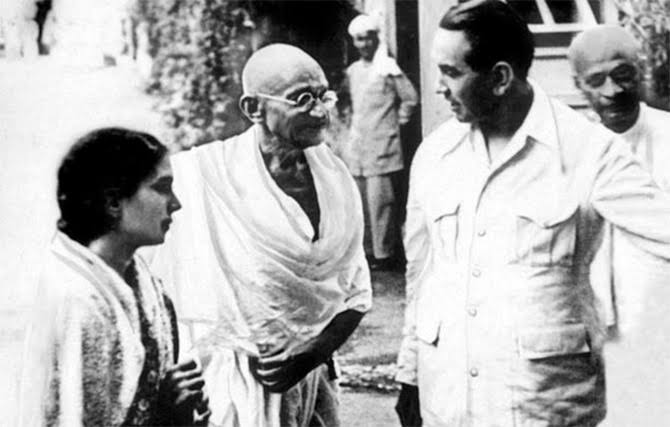
Mahatma Gandhi · 1939 Cipla factory visit
Unknown author / public domain · 1939
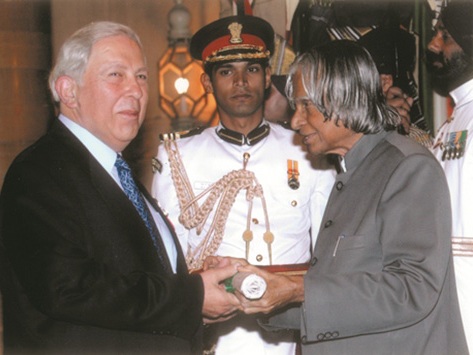
Padma Bhushan, 2005 · presented by President A. P. J. Abdul Kalam, honouring Dr. Yusuf K. Hamied's 2001 access-to-medicines work
Peepultreeworld · 2005
Commercial engine
Therapy areas
Respiratory (the long-standing anchor), anti-infectives, cardiology, chronic care (diabetes, urology), oncology and a growing US specialty franchise.
Field force
A multi-division Indian field force with one of the deepest respiratory and chronic-care detailing footprints in the country, complemented by a regulated-market commercial engine in the US and South Africa, and a presence across emerging markets.
Doctor engagement
Specialist-led detailing in pulmonology, paediatrics, cardiology and chronic-care segments; brand recall on respiratory franchises is a long-standing competitive moat.
Flagship brands
Respiratory leadership anchors the India portfolio, paired with chronic-care brands across cardiology, diabetes and urology. The US business carries a growing specialty mix alongside the regulated generics base.
Distribution
Domestic distribution across India plus regulated-market manufacturing and distribution in the US, EU, South Africa and emerging-market geographies. FY2025 US revenue at an all-time high of about $934 million.
Execution complexity
Two layered complexities. First, sustaining respiratory and chronic-care detailing intensity across hundreds of cities while the chronic-care market grows. Second, running an increasingly specialty-mixed US franchise that depends on filings, payer access and pricing discipline in price-erosion-heavy generics.
Timeline
Dr. Khwaja Abdul Hamied founds The Chemical, Industrial and Pharmaceutical Laboratories (CIPLA) in Bombay.
An Indian nationalist chemist chooses self-reliance over imported chemistry, and gives the company every patent royalty-free.
On 4 July, Mahatma Gandhi visits the Cipla factory and asks the company to supply India through the looming war.
Cipla's identity as the country's pharmaceutical backbone is established in a single conversation.
On 6 February, Dr. Yusuf K. Hamied confirms Cipla will supply HIV/AIDS antiretrovirals to African countries and aid groups at about $350 per patient per year.
Triggers the global access-to-medicines movement; widely cited as a catalyst of the November 2001 Doha Declaration on TRIPS and Public Health.
FY2025 closes with revenue of about ₹27,548 crore, net profit about ₹5,273 crore (up 28.4 percent), EBITDA margin about 25.9 percent and US revenue at an all-time high of about $934 million.
A company once defined by access pricing now operates as one of India's most profitable pharma majors at scale.
If it were built today
Every respiratory rep walking into a pulmonologist's chamber would already know what shifted in this prescriber's inhaler or chronic-care prescribing this fortnight, against which competitor.
Every divisional head in chronic care would see whether a month-end variance was a coverage gap in a specific HQ, a pricing dynamic or a competitor move, with the cause separated before the review.
Every US brand manager on a specialty or respiratory launch would see whether early uptake was a payer-access issue or a pricing one, with the diagnosis in days not quarters.
Leadership would act on the few coverage, integration and US launch decisions that move the quarter, not review a multi-engine portfolio in dashboards.
Stock and event snapshot
LoadingPharmaOS reading
A company whose long-run identity is the access-and-execution arc from 1935 to 2001 to now. FY2025 numbers reflect the operating leverage of the deep India branded base combined with the US specialty mix. The next-decade question is whether the same operational conviction that built the Hamied legacy is reproducible inside the call-by-call discipline that decides a pharma quarter today.
This is market commentary for business and industry analysis only. It is not investment advice, research advice or a recommendation to buy, sell or hold any security.
The PharmaOS point of view
The next advantage in pharma is decision intelligence, not a larger field force or more dashboards.
The first generation of Indian pharma built access. The second built scale. The next will run on commercial intelligence: every rep, manager and brand head acting on the real reason, in time to change the outcome.
Continue
See the operating intelligence layer.
A 20-minute private walkthrough on a slice of your own commercial data. Nothing migrated, nothing stored.
FAQ
No. Independent commentary written only from public sources for business and industry analysis. It implies no endorsement or commercial relationship.
From Cipla's own public materials (The Cipla Story PDF, Q4 FY25 press release and investor presentation), Wikipedia entries on Dr. Khwaja Abdul Hamied and Dr. Yusuf K. Hamied, contemporaneous press coverage of the 6 February 2001 announcement, and the 2001 Doha Declaration record. Sources are listed below; facts should be re-verified before commercial use.
No. The interpretation is qualitative business analysis only. It is not investment, research or trading advice, and no target price or directional call is offered.
Pharma's next advantage is decision intelligence across reps, managers and brands, not a larger field force or more dashboards.
Sources
- 01Wikipedia: Khwaja Abdul Hamied (founder, 1898 to 1972). en.wikipedia.org (accessed 2026-05-19)
- 02Wikipedia: Yusuf Hamied. en.wikipedia.org (accessed 2026-05-19)
- 03Cipla: Q4 FY25 press release. cipla.com (accessed 2026-05-19)
- 04Quartz: How an Indian tycoon fought Big Pharma to sell AIDS drugs for $1 a day. qz.com (accessed 2026-05-19)